
The Slow Erosion of Voice
There is a particular kind of silence that settles over a church when the culture begins to shift. It’s not loud, not dramatic, not announced. It shows up in tone before it shows up in policy. It appears in the way correction lands, in the way questions suddenly feel unwelcome, in the way warmth cools without explanation. People don’t lose their voice in these environments all at once. The erosion is slow, almost imperceptible, unfolding through information suppression, cultural reorganization, and psychological destabilization. What looks like backsliding is often something far more structural: the information environment has changed, and the person is now trying to survive inside it.
Church Culture as an Information System
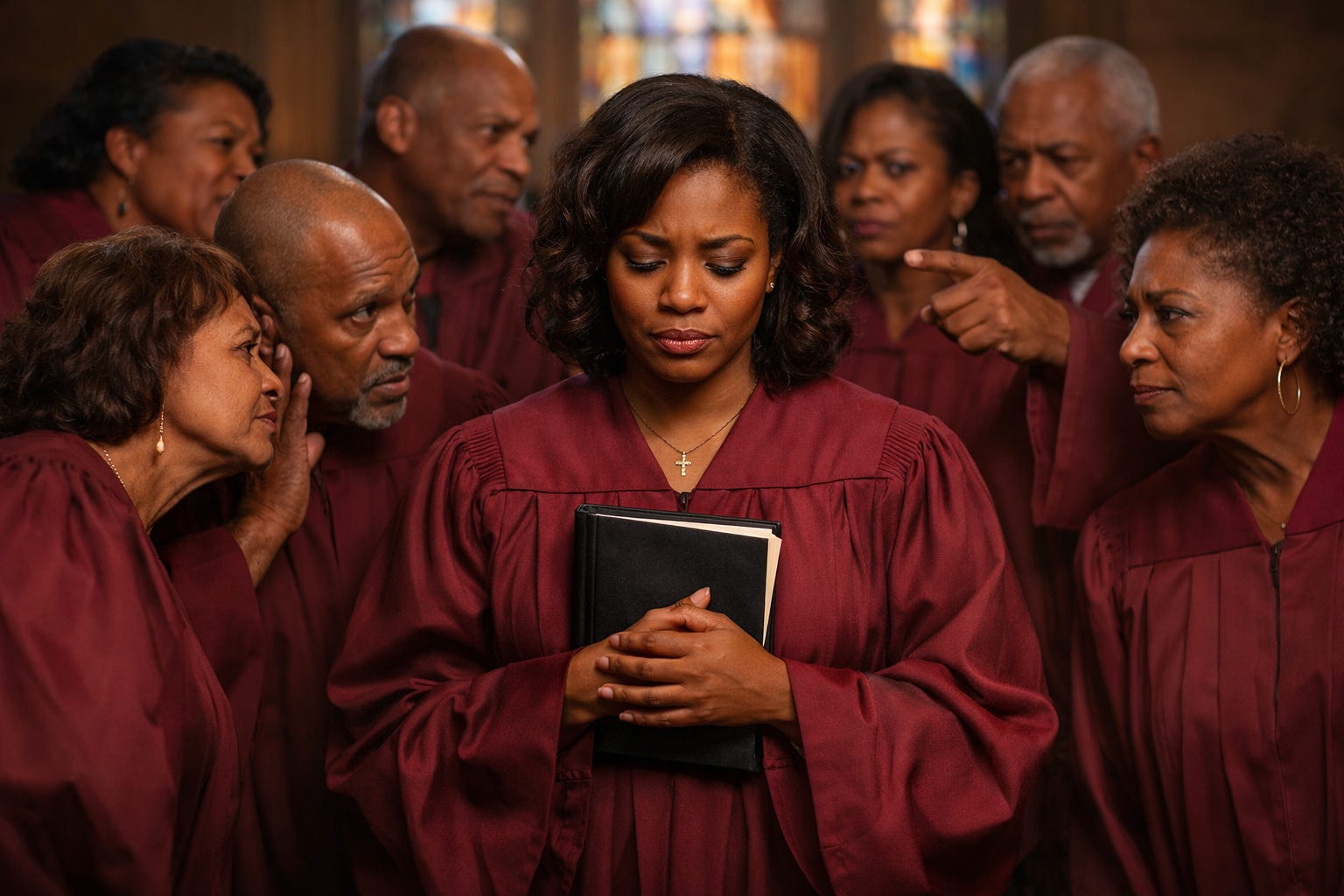
Church culture is not just spiritual; it is an information system. Belonging is shaped by who is informed, who is corrected, who is ignored, and who is affirmed. Information in these spaces is cultural, spiritual, and relational all at once. When a “changing of the guards” occurs—when leadership norms, alliances, or expectations shift—the information environment shifts first. People feel the change before they can name it. They sense it in the pauses, in the evasive answers, in the sudden defensiveness that replaces dialogue. These are not interpersonal quirks. They are signals that the rules have changed.
Code Switching as Survival
As these signals accumulate, individuals begin to adapt. Code switching becomes a survival strategy, functioning not just as a linguistic shift but as an information behavior. It may look like altering preaching style, adjusting tone, suppressing questions, or performing a culturally acceptable version of oneself. Over time, this adaptation becomes a form of identity masking. The cost is subtle but profound: authenticity begins to thin out, replaced by a version of self that can survive the new environment.

Gaslighting and Cognitive Dissonance
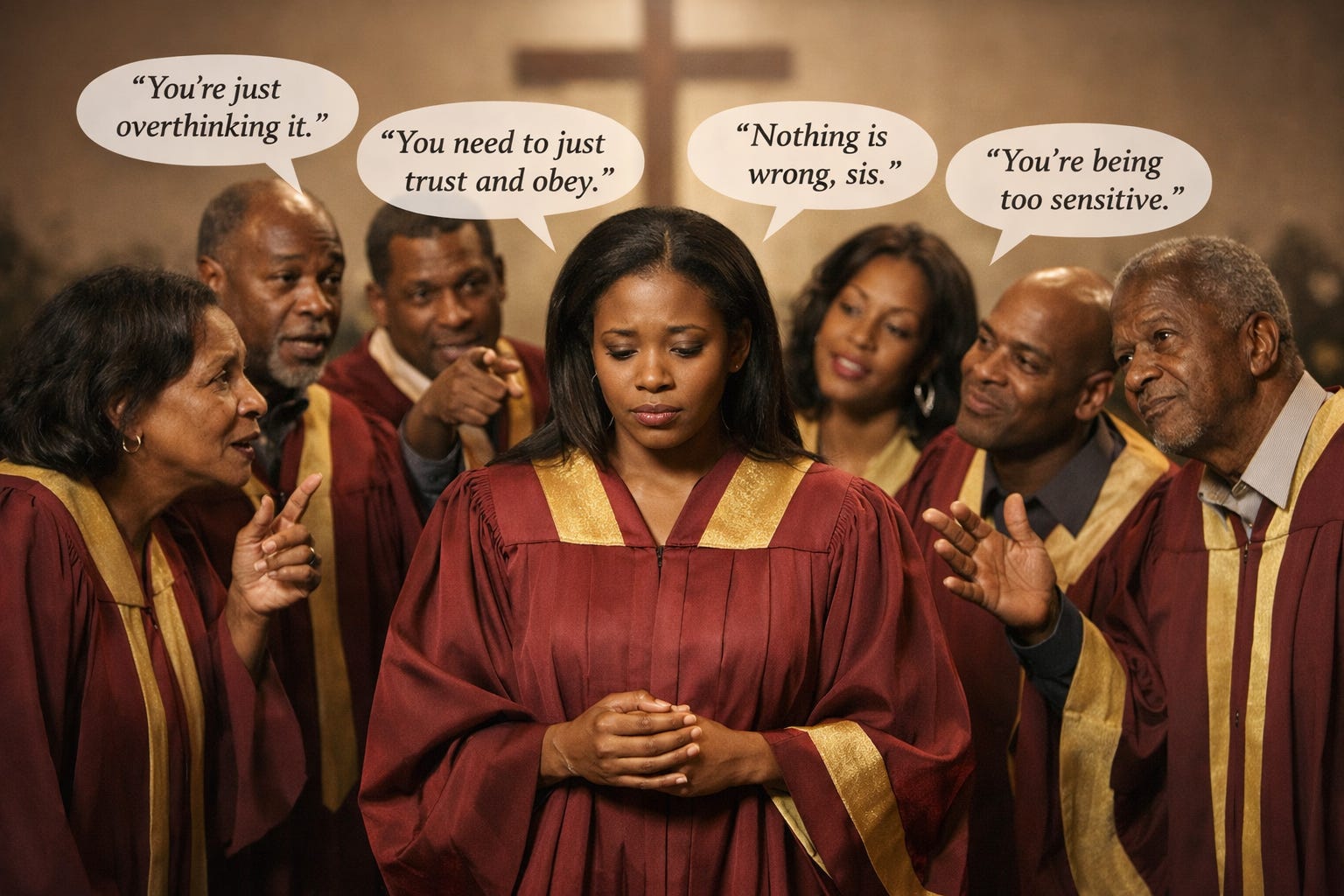
The most destabilizing dynamic emerges when the environment denies that anything has changed. “Nothing is wrong.” “You’re imagining it.” “You’re being too sensitive.” These contradictions create cognitive dissonance, especially when the shifts are real, observable, and felt in the body. In spiritual contexts, gaslighting is often reframed as maturity, obedience, or discernment, making it even harder to identify and resist. The result is a quiet war between lived experience and imposed narrative.
Trauma Responses in Spiritual Spaces
Under these conditions, trauma responses begin to surface. Some people fawn, over‑accommodating to avoid conflict. Others become hypervigilant, scanning for subtle signs of disapproval. Still others withdraw emotionally or physically to preserve psychological safety. These responses are not spiritual shortcomings. They are survival strategies—adaptive, intelligent, and deeply human.
Misplacement and the Loss of Fit
Eventually, misplacement occurs. This is the moment when a person’s internal identity no longer aligns with the external environment. It is a form of psychological displacement, not rebellion or immaturity. People do not lose their calling; they lose their place within a system that has reorganized itself around new cultural and informational norms. Leadership decline, in this sense, is not a moral or spiritual failure but an outcome of information behavior, cultural power, and trauma‑informed adaptation.
The Burden of the “Spirit of Offence”
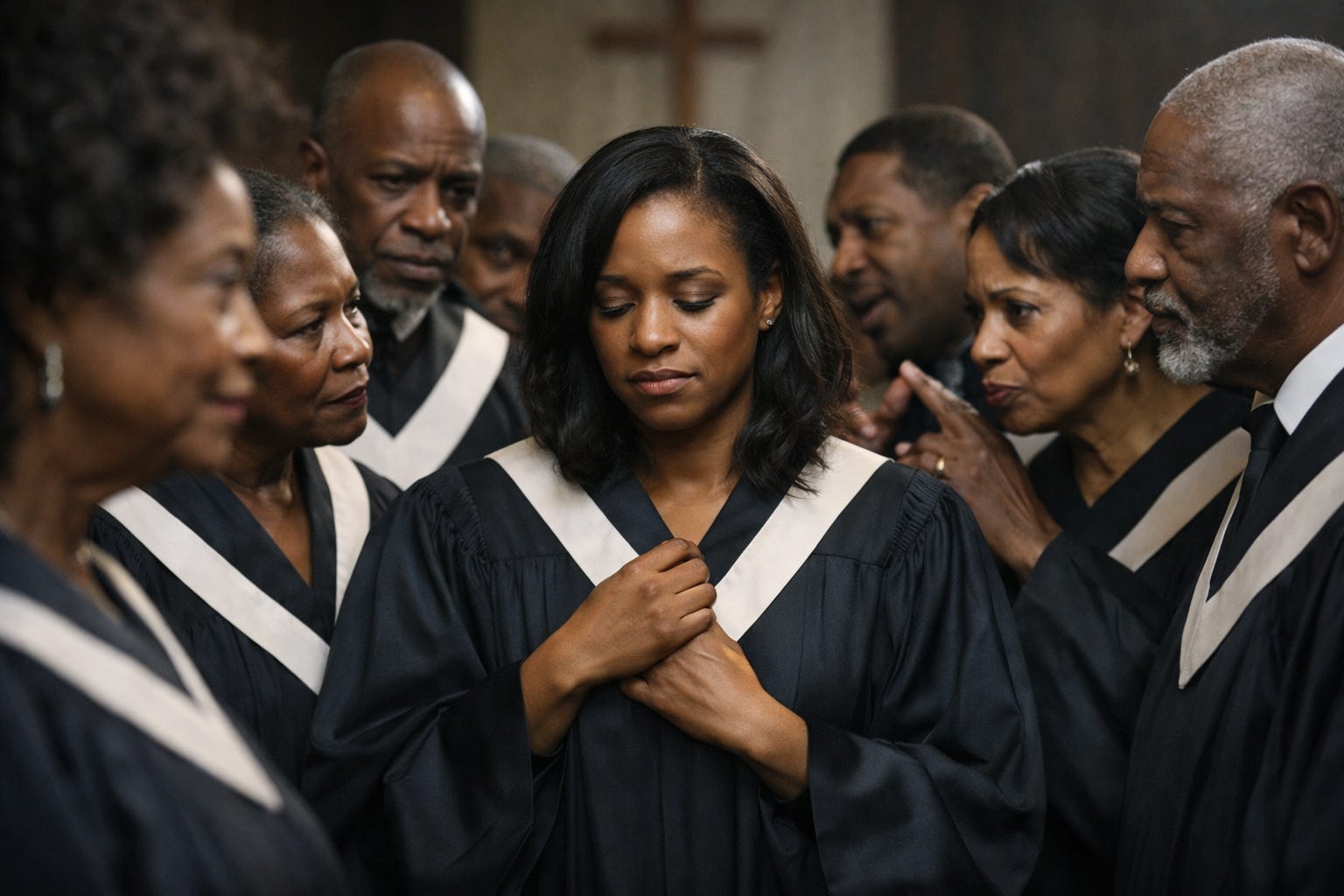
One of the most effective tools for silencing those who struggle in shifting church environments is the accusation of carrying a “spirit of offence.” The moment someone expresses discomfort, confusion, or emotional pain, the narrative is flipped: the issue is no longer the environment, the behavior, or the power dynamics—the issue becomes the person’s sensitivity. Their reaction is spiritualized, pathologized, or moralized. They are told they are offended, thin‑skinned, or unwilling to submit. And because offence is framed as a spiritual flaw, the burden of repair is placed entirely on the individual, never on the system that harmed them.
This dynamic is often reinforced through a familiar comparison: “If your boss mistreats you at work, you don’t just quit, do you?” The implication is that endurance is maturity, that staying is righteousness, and that leaving is evidence of rebellion or emotional instability. But this analogy collapses under scrutiny. Workplaces have HR departments, legal protections, and formal accountability structures. Churches often do not. And unlike employment, spiritual belonging is not a contract—it is a relationship. When that relationship becomes psychologically unsafe, leaving is not immaturity; it is discernment.
Labeling someone as “offended” becomes a way to avoid examining the deeper informational and cultural shifts that created the rupture in the first place. It reframes trauma responses as spiritual weakness and turns legitimate concerns into evidence of personal failure. In this way, the “spirit of offence” becomes a mechanism of control—a theological shield that protects the institution from accountability while isolating the individual who is already struggling to make sense of their experience.
Why Some Belong While Others Grapple
Not everyone experiences the same dissonance when the church culture shifts. Some people seem to belong effortlessly, adapting to new norms without losing their footing. Others find themselves disoriented, questioning their place, their voice, and even their faith. The difference often lies in how individuals interpret and respond to the informational cues that signal belonging.
Those who belong easily tend to align with the dominant informational rhythm—they intuit the unspoken expectations, mirror the accepted tone, and internalize the cultural logic of the environment. Their identity and the institution’s identity are in sync. They read the cues correctly because the cues were designed for them.
But for those who grapple, the cues are misaligned. They hear the same words but feel a different meaning. They sense tension where others sense harmony. Their authenticity collides with the institution’s evolving narrative. In these cases, belonging becomes conditional—dependent on how well one can perform acceptance, suppress dissent, and translate discomfort into compliance.
Assumption plays a central role here. It fills the gaps where clarity should live. It turns questions into threats, difference into disobedience, and discomfort into deficiency. Assumption is the quiet architecture of misinterpretation—and the first barrier to healing.
Toward Understanding
If there is a way forward, it begins with understanding. Not blame. Not accusation. Not self‑reproach. Understanding.
Understanding that church culture is an information system. Understanding that belonging is shaped by cues, not just convictions. Understanding that silence, tone, and assumption carry as much weight as doctrine. Understanding that some people thrive because the system was built around their voice—and others struggle because the system was built to contain it.
When these dynamics are named, their grip loosens. When the informational, cultural, and psychological forces at play are understood, people begin to see themselves clearly again. And clarity is the beginning of restoration.
For readers who want to explore the full theoretical framework—including Collaborative Information Behavior, Face Threat Theory, code-switching, gaslighting mechanisms, trauma‑informed responses, and the anonymized auto-ethnographic case that grounds this work—the complete academic essay is available here:
https://doi.org/10.13140/RG.2.2.25912.71685
Understanding is not the end of the journey, but it is the first step toward reclaiming voice, identity, and spiritual safety.