Most of us don’t think of “information behavior” as something emotional. We imagine it as cognitive, technical, or procedural — something we do with our minds, not something we feel with our bodies. But the deeper I go into both Library & Information Science and Clinical Counseling, the more I see that information is never just information. It is always shaped by the emotional environment in which it is produced.
That realization is what led me to write my recent paper comparing two biblical figures — Jesus and John the Revelator — not as theological subjects, but as information environments. Their assignments reveal something profound about how humans create meaning under different emotional and relational conditions.
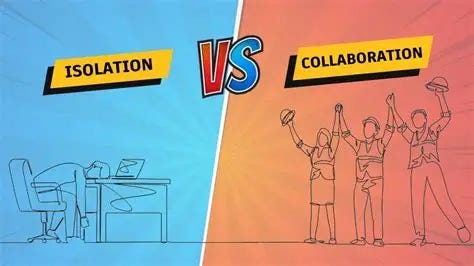
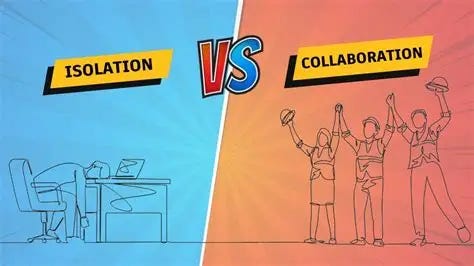
Jesus’ ministry is a picture of collaborative information behavior: shared labor, shared thinking, shared emotional load. John’s exile on Patmos is the opposite: solitary, high‑pressure, resource‑scarce meaning‑making. And yet both produced coherent, enduring information artifacts.
The difference is affective load — the emotional cost of processing, interpreting, and producing meaning.
We think better together
Clinical counseling research calls this co‑regulation.
LIS calls it collaboration.
Everyday life calls it support.
Whatever name we use, the principle is the same:
Humans make clearer meaning when they are not carrying the emotional load alone.
Jesus’ environment shows what happens when information work is shared:
clarity increases
emotional burden decreases
meaning becomes communal
information becomes sustainable
This is why teams outperform isolated individuals. It’s why group counseling works. It’s why community stabilizes us.
But sometimes we are John
John’s assignment was different.
He produced meaning under extreme isolation, persecution, and emotional strain. Under normal conditions, that level of affective load would fragment cognition. Trauma research tells us this. Crisis informatics tells us this. Counseling practice tells us this.
And yet John produced Revelation — a coherent, symbolically rich information artifact.
How?
Through what I call compensatory collaboration: a non‑material resource that stabilizes meaning‑making when human collaborators are absent. In John’s case, that resource was spiritual. For others, it might be internalized support, ritual, memory, or a deeply held sense of purpose.
The third category: dysfunctional isolation
There is a difference between:
isolation that is imposed
isolation that is compensated
isolation that is self‑created
The last category — self‑imposed isolation — is where information begins to degrade.
High affective load + no collaboration + no compensatory resource = fragmentation.
This is where:
clarity collapses
meaning distorts
interpretation becomes unstable
information artifacts reflect the chaos of the environment
We see this in counseling.
We see it in LIS.
We see it in life.
Why this matters for us
Most of us are not writing gospels or apocalyptic visions.
But we are producing meaning every day:
in our work
in our relationships
in our internal narratives
in the stories we tell ourselves about our lives
And the quality of that meaning is shaped by the environment in which it is produced.
So here is the question I leave with you — not as a researcher, but as a fellow human being:
What information environment are you living in right now?
Are you in a collaborative, low‑affective‑load space?
Are you in a solitary but compensated space?
Or are you drifting into dysfunctional isolation without realizing it?
Your clarity depends on the answer.
If this resonates
I’ll be sharing more reflections that bridge LIS, counseling, spirituality, and the emotional architecture of meaning‑making. If you want to explore how your information environment shapes your thinking, your clarity, and your emotional load, stay connected.
Your information life is telling a story.
Let’s learn how to read it.
FOR ACCESS TO THE ENTIRE ACADEMIC ARTICLE, GO HERE: